Objects of Desire
Mud brick, reconsidered: the new Najdi houses
Why Riyadh’s newest hotels and private houses borrow from At-Turaif’s metre-thick mud walls.
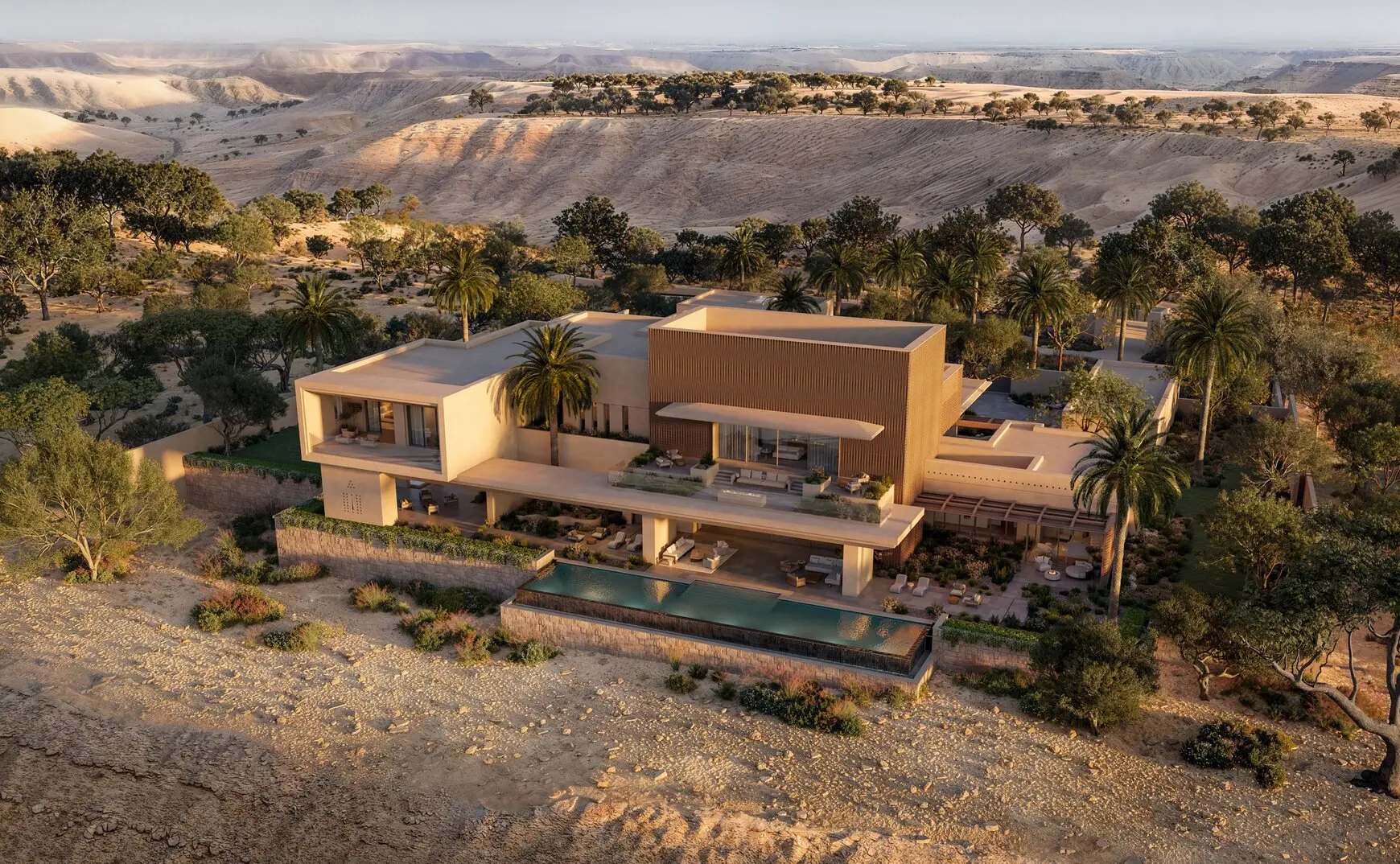
Photo Credit
Image courtesy of © AmanRiyadh builds some of the tallest towers in the region, so why are its newest luxury addresses looking back to mud? Because the Najdi house was a climate machine before it was a style: thick walls, shaded courtyards and gypsum that bounces the sun. From Bab Samhan to Corinthia’s ten residences and Aman’s Amansamar, the old idiom is being cut again. No prices, only buildings.
The oldest new look in town
What does luxury look like in a city of glass towers? Increasingly, like mud. Riyadh’s newest hotels and private houses are borrowing the vocabulary of At-Turaif, the 15th-century district in Diriyah that UNESCO describes as an outstanding example of the Najdi architectural and decorative style, with its use of adobe in palatial buildings and a remarkable sense of geometric decoration.
The original survived partly by being left alone. UNESCO’s own assessment notes that At-Turaif escaped aggressive modern development because it was abandoned for a long time: the rare case in which neglect turned out to be the best conservation policy. The walls owe their warm colour, the Diriyah Company explains, to iron oxide, the same mineral that tints the Najd plateau.
There is engineering behind the look. Diriyah’s own guides explain that the old walls, in places more than a metre thick, absorb the heat of the day and release it through the night, and that courtyards are proportioned so their walls shade the ground at noon. The white gypsum along the parapets reflects the sun where it strikes hardest, and the more of it a building wore, the higher its standing: an early, very elegant form of showing off.
Even the ornament follows rules. The geometric patterns worked into the gypsum, Diriyah’s guides say, are a formal language developed within the limits of the material, the tools and the need to be read from a distance. What looks like decoration is a system, and the new architects are learning its grammar.
Living in the style
Bab Samhan, the first hotel in historic Diriyah, is the place to try the idiom on. Its 106 rooms and 28 suites are each, in the hotel’s words, a homage to Najdi culture, a short walk from the walls they quote. The St. Regis Riyadh, in Al Hada, takes the other route to the past: the hotel describes itself as cast from ancient Tuwaiq mountain stone, so that even the newest building in the quarter arrives looking geologically patient.
Houses still on the drawing board
The private houses are coming. Corinthia is building a hotel of 86 rooms in Diriyah, some 20 minutes north-west of central Riyadh, with ten private residences beside it in the traditional Najdi style. Their facades keep the furjat, the old openings that let the breeze through the walls, and residents will share the hotel next door: the courtyard house, with room service.
Riyadh’s most expensive new addresses are learning from houses built of earth.
Corinthia’s own page adds, with admirable candour, that its images are renders and may differ from the final building: the only disclaimer in property that reads like architectural modesty.
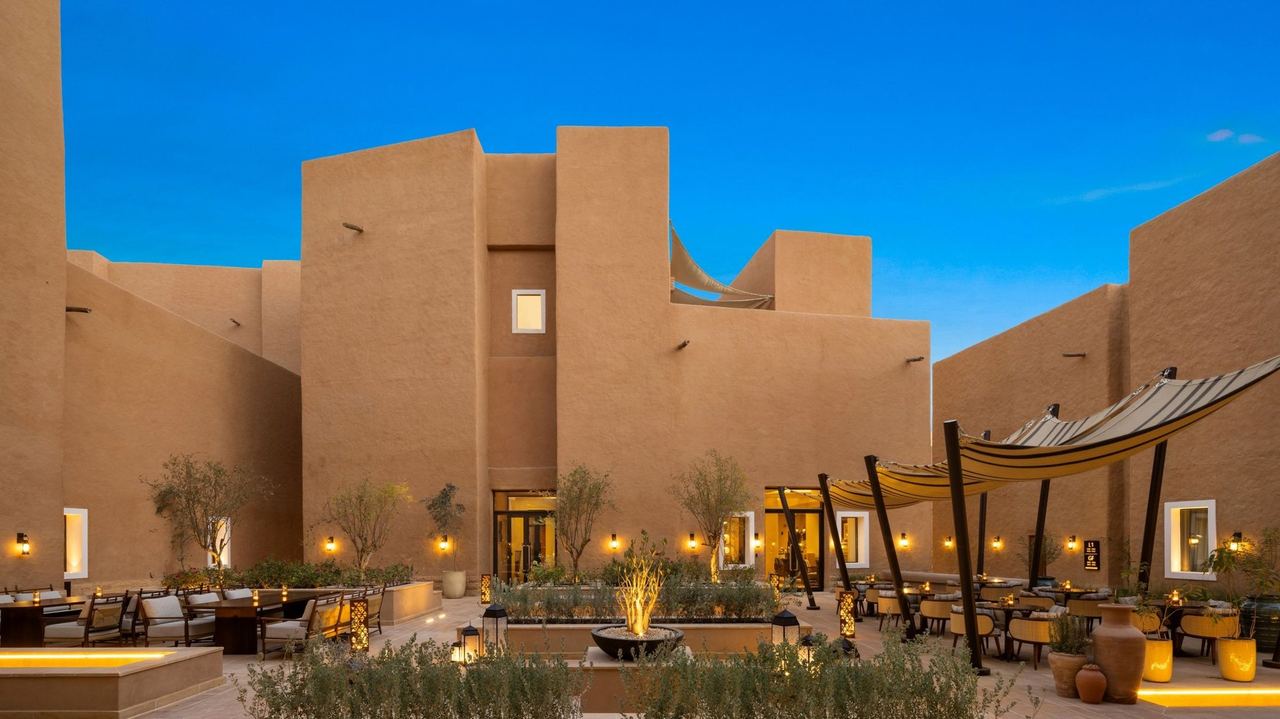
Photo Credit
Image courtesy of © Bab Samhan, a Luxury Collection Hotel, DiriyahFurther out, Aman’s Amansamar is taking shape at Wadi Safar, a stretch of wadis and plateaus close to At-Turaif. Jean-Michel Gathy of Denniston has imagined it as a refined interpretation of Najdi architecture paired with Aman’s minimalism, with hotel suites, branded villas and private estates in natural materials and metallic accents. Polo and golf are close by. Aman lists it, with characteristic restraint, as coming soon.
Why mud, why now
The answer is partly climate and partly confidence. Thick walls and shaded courtyards were the Najd’s answer to the sun, and a city of glass towers can afford to look back without looking old-fashioned. UNESCO calls the Najdi style specific to the centre of the Arabian Peninsula; Riyadh is simply building in its own accent. The irony is gentle: Riyadh’s most expensive new addresses are learning from houses built of earth.
Our advice: see the original first. Walk At-Turaif at dusk, then look at the new houses with a sharper eye; the renderings make more sense once you have stood in a courtyard at noon. Prices are not published here, and the developers’ own sites list the details.
Why it's on our list
- The oldest new look in town
- Living in the style
- Houses still on the drawing board
Location
The map comes from Google Maps, which sets its own cookies once it loads.
More in depth
 Objects of DesireThe bar without bottles: mocktails, MICHELIN and qahwaRiyadh’s alcohol-free bars, the MICHELIN Exceptional Mocktail Award and the etiquette of qahwa.
 Objects of DesireLess parked than crouched: the electric Jaguar and the new supercarsJaguar’s Type 00 and Type 01, Ferrari’s first electric car and the record-breakers around them.
 Objects of DesireTwo marques on the Northern Ring RoadRolls-Royce’s two-storey atelier, an electric debut, Porsche’s hours and the art of being driven.